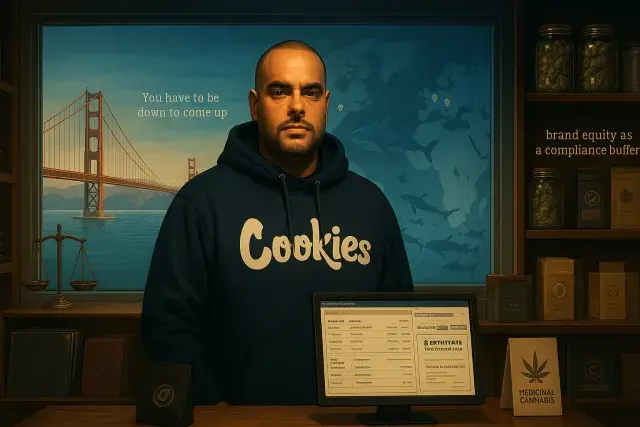
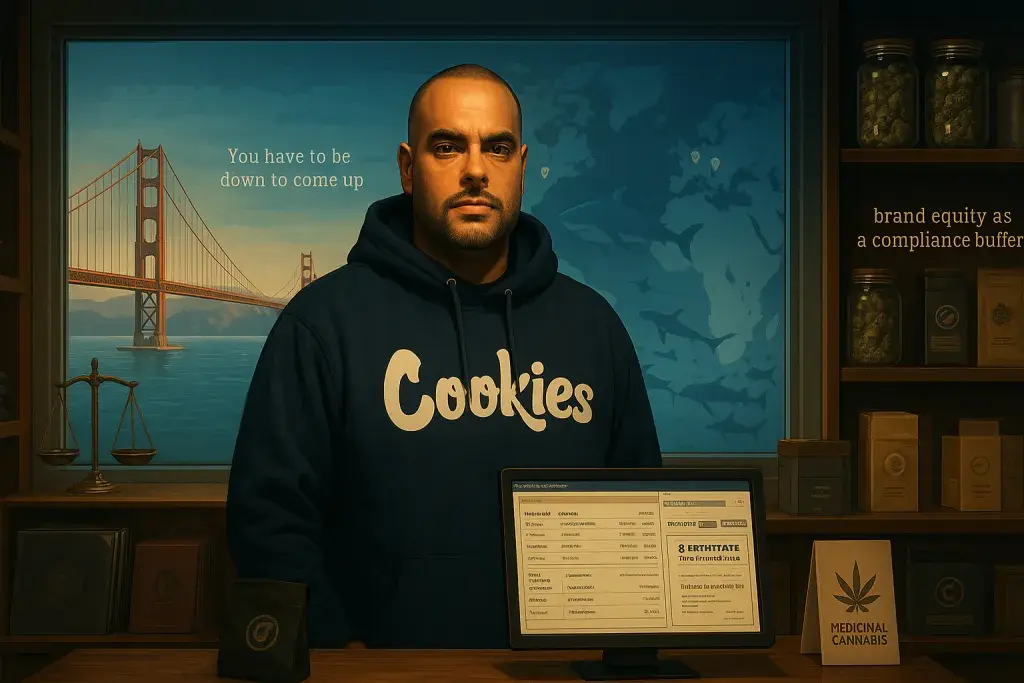
Running a cannabis business is not like running any other business. The regulatory exposure, the tax burden under 280E, the constant tension between state compliance requirements and federal prohibition - none of it has a clean analog in conventional retail or consumer goods. Which is precisely why a detailed, candid account of how one operator built a billion-dollar cannabis and fashion enterprise from a single San Francisco dispensary floor carries real weight for anyone in the industry, or anyone thinking about entering it. Gilbert Anthony Milam Jr. - known professionally as Berner - has written that account in Becoming Legend: The Billion-Dollar Blueprint To Be A Whale In A Sea Of Sharks, and it reads less like a celebrity memoir and more like an operator's field manual.
Berner's entry point into cannabis was frontline retail - working at The Hemp Center, an early medical-only dispensary in the San Francisco Bay Area, before adult-use markets existed and long before the compliance infrastructure that now defines licensed cannabis retail had taken shape. The lessons he absorbed there - patient-centric service, menu curation, customer education - map directly onto what regulated dispensaries across adult-use markets still wrestle with today. In states with mature regulatory frameworks, the operational expectations are exacting: compliant packaging, verified lab testing with certificates of analysis, accurate inventory tracking, and point-of-sale systems built for the industry's specific reporting demands. A retailer running an Oregon cannabis POS, for instance, has to reconcile real-time inventory against state seed-to-sale tracking requirements while maintaining the kind of floor-level customer experience that Berner describes as foundational to Cookies' identity. The technical and the human have to coexist - and that is harder to execute than it sounds.
What makes Becoming Legend useful to a B2B audience is not the celebrity angle. It's the specificity about brand-building under conditions that most consumer goods companies never face. Cookies did not grow through traditional marketing channels - cannabis advertising remains heavily restricted at the state level, and federal advertising platforms impose their own constraints on licensed operators. Berner is direct about this in the book: Cookies built its market presence by placing products in the hands of people who would organically spread the word. That is not an accident of charisma. It is a deliberate strategy developed in response to an environment where a brand cannot simply buy its way to visibility through conventional media. For cannabis brands trying to compete on wholesale menus in crowded dispensary SKU environments, that authenticity-first approach is worth studying.
What Early Dispensary Work Actually Teaches
The first chapters of Becoming Legend cover Berner's time at The Hemp Center, and they read, in part, like an orientation for cannabis retail operations - even if that wasn't the explicit intent. The core value he names first: cannabis is a medicine, regardless of how recreational markets are structured. That framing shapes how a dispensary curates its menu, how it trains its staff, and how it handles the compliance responsibility that comes with selling a controlled substance. Responsible retailing in licensed cannabis is not optional. Age verification, purchase limits, product disclosure - these are codified obligations, and operators who treat them as afterthoughts eventually find themselves in front of a regulatory body explaining why. Berner's insistence on the medicinal dimension of the product isn't marketing language; it's an operating posture that naturally produces more careful, more credible retail environments.
Brand Equity as a Business Asset - and a Compliance Buffer
One of the more practically useful arguments in Becoming Legend is Berner's insistence that founders and operators understand the value they bring independent of capital. "Whether that be cannabis or music or fashion," he writes, "when you have an eye and knowledge for something, when you have experience in certain industries, that's very valuable." In cannabis specifically, that calculus matters because the industry's structural economics are punishing. The 280E tax provision - which disallows standard business deductions for companies trafficking in Schedule I controlled substances - compresses margins in ways that operators in virtually any other sector never experience. Excise taxes layer on top of that. Licensing fees, compliance costs, required testing - all of it hits the bottom line before a single unit moves through a POS terminal. In that environment, brand equity isn't a soft asset. It is a hard competitive advantage that reduces customer acquisition cost and commands pricing power on the wholesale side.
The Operational Reality Behind the Expansion Story
Cookies' growth from San Francisco to a global footprint is the kind of story the cannabis industry likes to tell itself as proof of what's possible. Fair enough. But the operational reality of that kind of expansion - managing licensing across multiple jurisdictions, maintaining brand consistency against varying state packaging and labeling requirements, keeping compliant supply chains intact as SKU counts grow - is genuinely difficult. Multi-state operators and international cannabis ventures face regulatory fragmentation that has no parallel in conventional retail. Each market has its own testing standards, its own track-and-trace requirements, its own rules about what a brand can and cannot say in advertising. Berner addresses the expansion honestly, including the hard episodes: regulatory friction, legal disputes, personal crises. The line he offers toward the end of the memoir - "You have to be down to come up" - is not inspirational filler. For a cannabis operator who has watched a license get pulled, a wholesale account go dark, or a banking relationship evaporate, it is a precise description of the job.
Becoming Legend won't solve a dispensary's 280E problem or streamline its METRC submissions. What it does do is document, in real detail, how one operator built durable brand value inside an industry that routinely tries to destroy it. That's not nothing.