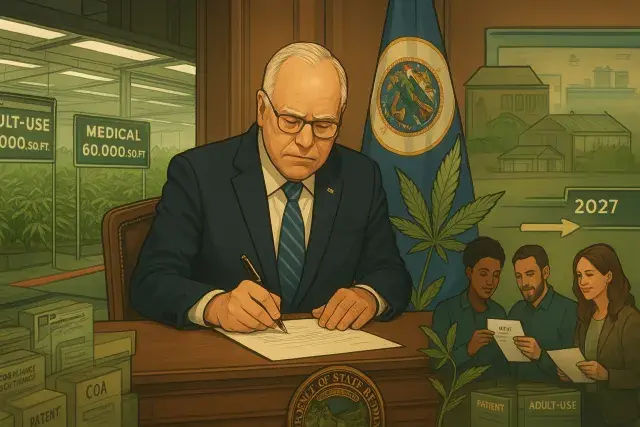
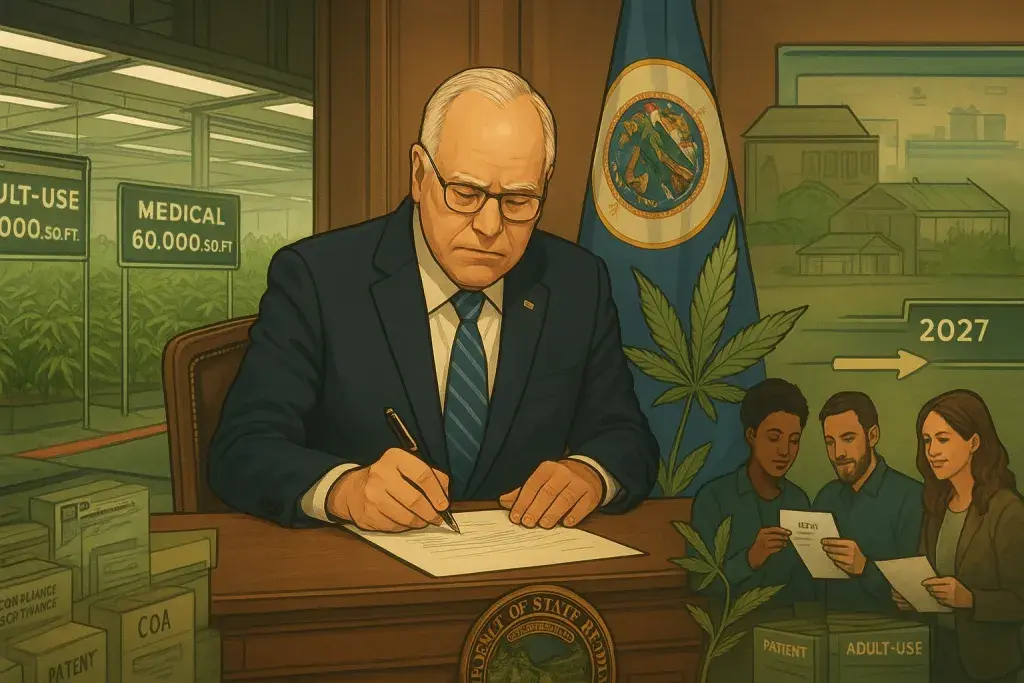
Minnesota Gov. Tim Walz signed legislation last week that fundamentally reshapes how the state's cannabis supply chain is structured - reducing canopy caps for combined license holders, separating medical and adult-use operational tracks, and creating a new microbusiness license class that won't come online until 2027. For operators and investors already in the market, or watching from the sidelines, the changes carry real structural consequences.
What the Law Actually Changes
The core move here is the elimination of the combined medical and adult-use cannabis license - a single license type that had allowed operators to serve both markets under one regulatory umbrella. That structure is gone. In its place, the law sets a new indoor plant canopy cap of 38,000 square feet for adult-use cultivation, a significant reduction from the 90,000-square-foot ceiling that combination licensees had previously been eligible for. Medical cannabis cultivation gets its own allocation: 60,000 square feet reserved specifically for that product line.
On paper, that looks like a haircut for large operators. In practice, though, it's a deliberate compression of vertical scale - one that reflects a recurring tension in regulated cannabis markets between allowing commercial efficiency and preventing a handful of well-capitalized cultivators from locking up wholesale supply. The previous combination license structure was described by state Rep. Nolan West (R) as "absolutely brutal" for businesses, and he characterized the bill as fixing "the litany of problems" in the state's cannabis market while opening it up so the state "can have a thriving market that isn't dominated by just a few players." That framing - bipartisan, small-business-oriented - is notable in a regulatory environment that often cleaves along partisan lines.
Microbusiness License and the 2027 Delay
The new cannabis microbusiness license is arguably the most forward-looking element of the bill - and the most deferred. Availability begins in 2027, which means operators interested in that tier need to treat it as a planning horizon, not an immediate entry point. Microbusiness frameworks in other state markets have generally been designed to lower the capital barriers to entry: smaller canopy allowances, reduced fees, and often more limited distribution rights. Minnesota's version will need to be watched closely as the Office of Cannabis Management (OCM) develops implementing rules.
The 2027 start date also creates a practical question for early-stage entrepreneurs and social equity applicants who may have been counting on that license class as their entry path. Two years is a long runway - and in a regulated market, runway costs money. Prospective microbusiness applicants will need to track OCM rulemaking closely in the interim, since the specific parameters of the license class - canopy limits, vertical integration permissions, retail rights - will shape whether the opportunity is genuinely accessible or narrowly useful.
Hemp-Cannabis Dual Licensing and the Psilocybin Study
The law also allows companies to hold both hemp and cannabis business licenses simultaneously. That's a meaningful operational shift. Hemp-derived products - particularly cannabinoid products sold outside the licensed dispensary channel - have occupied a legal gray zone in many states, and companies straddling both sectors have historically faced compliance friction at the licensing level. Allowing dual licensure reduces that structural barrier and could open more coherent business models for brands operating across both supply chains. For cannabis POS vendors, compliance software providers, and seed-to-sale tracking platforms, that dual-license dynamic adds complexity worth planning for: inventory management systems will need to handle distinct product categories with different regulatory requirements under the same operator account.
Then there's the psilocybin provision. The legislation directs the OCM to develop a feasibility study for a therapeutic psilocybin program, with the report due by January 15, 2027. This is a study - not a program. The distinction matters. Oregon and Colorado have moved further down the path of regulated psilocybin access, and Minnesota is essentially beginning the research phase. For cannabis operators, the near-term business implication is minimal. The longer-term signal, though, is that Minnesota's regulatory infrastructure is being asked to think about psychedelic-adjacent programming while still working through the operational challenges of a relatively new adult-use cannabis market.
The Broader Operational Picture
Minnesota's adult-use market is still in early development. Structural legislation like this - adjusting license types, recalibrating canopy caps, separating product-line tracks - is exactly the kind of second-generation regulatory repair that states typically undertake once initial rollout exposes the friction points. The design of combined licenses often looks efficient at launch and creates downstream problems: mixed inventory compliance obligations, conflicting product labeling requirements, complicated wholesale pricing when medical and adult-use product batches need to be tracked separately through seed-to-sale systems.
Separating the tracks creates cleaner compliance architecture. It also forces operators to make explicit choices about which market they're prioritizing - and to staff, build out, and capitalize accordingly. For dispensaries carrying both medical and adult-use SKUs, that distinction has real floor-level consequences: product batches, COA documentation, packaging compliance, and purchase limits all differ between patient and adult-use customers. Cleaner upstream separation should, in theory, reduce the compliance surface area at the retail level.
What the law doesn't immediately resolve - and what no legislative fix can fully address - is whether Minnesota's licensed market will achieve the pricing and product-availability conditions needed to draw consumers away from unregulated supply. That remains the defining challenge for every adult-use market, regardless of how well the licensing structure is drawn.