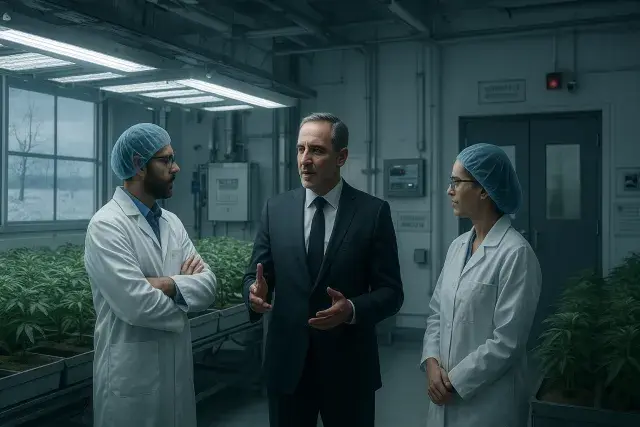
For the first time in more than five decades of federal drug policy, the Trump administration has formally acknowledged what patients, physicians, and state regulators have known for years: medical cannabis has legitimate therapeutic utility. The administration's decision to reclassify state-authorized medical cannabis products and recognize state-licensed medical cannabis providers marks the end of a policy position that had grown increasingly indefensible. It matters enormously - and it still isn't enough.
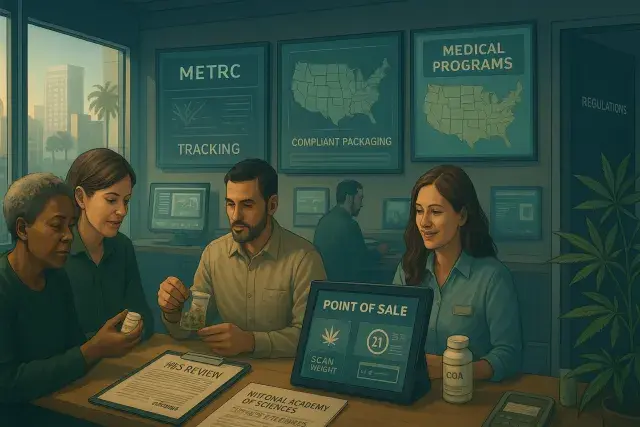
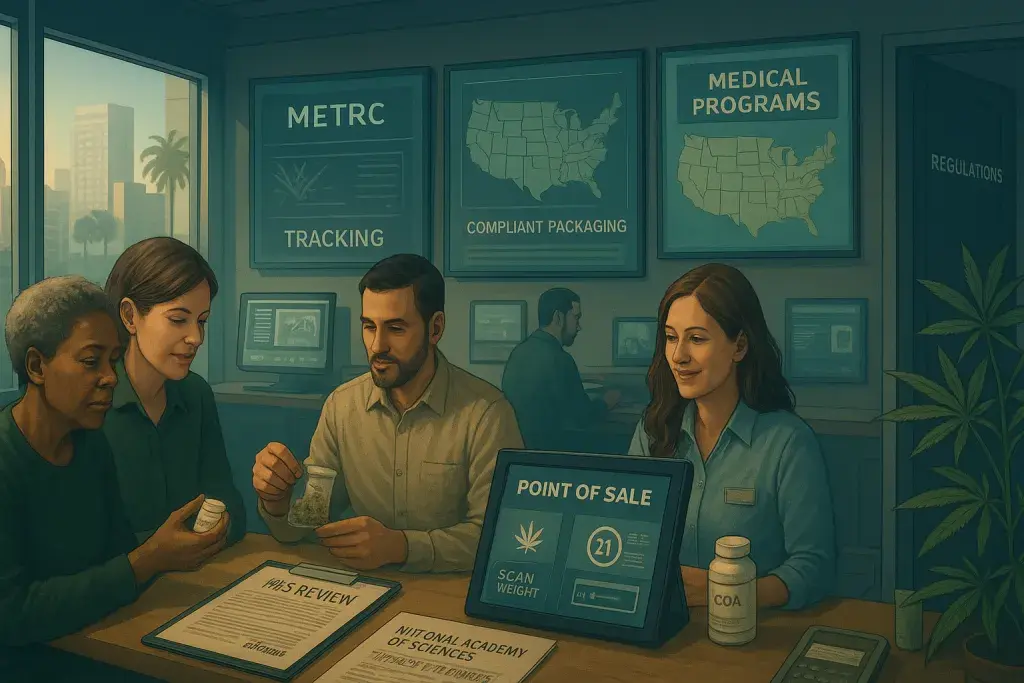
The practical stakes for the licensed cannabis industry are real. Operators in states with established medical programs have spent years building compliance infrastructure - seed-to-sale tracking, METRC integrations, stringent COA documentation, compliant packaging, and age-restricted point-of-sale protocols - to satisfy state regulators while existing in a federal gray zone that made banking, payment processing, and interstate commerce legally treacherous. For dispensaries in California, which launched the nation's first medical program in 1996 and has since built one of the world's most complex cannabis retail ecosystems, this shift carries particular weight. The operational layer these businesses have built - including the cannabis pos system california infrastructure that ties inventory, compliance reporting, and customer data together - has always been built on the implicit bet that federal policy would eventually catch up. That bet is starting to pay out, slowly.
The numbers behind the rescheduling argument were never seriously in dispute among public health professionals. The Department of Health and Human Services conducted an extensive review in 2023 - running to some 250 pages - and found that more than 6 million patients use medical cannabis under physician supervision. The agency concluded that medical cannabis, for conditions supported by credible scientific evidence, does not pose unacceptably high safety risks. Separately, researchers affiliated with the National Academy of Sciences had already determined that conclusive evidence supports cannabis as effective for chronic pain management. Nearly 70 percent of family physicians, nurse practitioners, and other health professionals now agree that cannabis carries well-established medical uses, and more than a quarter report having recommended it to patients. The science wasn't waiting on Washington. Washington was waiting on itself.
What This Change Actually Does - and Doesn't Do
Here's the catch: rescheduling medical cannabis, while historic as a matter of federal acknowledgment, does not resolve the deeper structural conflict between state and federal law. Ten states - Indiana among them - still have no medical cannabis program. Patients there remain in legal jeopardy regardless of what the federal schedule says, because without a state-licensed provider or state-authorized product, there is no recognized framework they can operate within. The federal change offers them nothing today.
The 24 states that have enacted adult-use legalization present a separate problem entirely. Rescheduling addresses medical cannabis. It says nothing about the regulated recreational market, which means that dispensary operators, brands, wholesalers, and ancillary businesses serving adult-use consumers are still, technically, in violation of federal law. That has direct consequences for access to banking services, the persistent 280E tax burden that prevents plant-touching businesses from deducting ordinary business expenses, and the ability to attract institutional capital. None of that changes with this order.
To put it plainly: the administration has corrected a specific scientific and policy error while leaving the broader contradiction intact. Multi-state operators running both medical and adult-use dispensaries under one license structure will find that only a portion of their business has gained any federal relief - and even that relief is conditional on how courts and federal agencies interpret the rescheduling in practice.
The Federalism Argument That Still Needs to Be Won
Forty states have enacted medical cannabis laws. Not one has ever repealed its program. That is a durable political signal - and a business signal. Operators who have built vertically integrated operations across multiple states, managing wholesale menus, multi-SKU product catalogs, and retail compliance across different regulatory regimes, have effectively demonstrated that state-level cannabis regulation works. The industry's compliance record, its investment in retail technology, and its track record of operating within tightly defined licensing parameters have made the case that these are serious, regulated businesses.
The logical endpoint - removing cannabis from the Controlled Substances Act entirely and giving states explicit authority to regulate adult-use markets the way they regulate alcohol - would resolve the 280E problem, open conventional banking to plant-touching businesses, and allow payment infrastructure providers to serve the cannabis sector without legal exposure. Right now, cashless payment workarounds and cash-heavy dispensary operations remain a feature of daily retail life because federal law still classifies the underlying transaction as illegal in adult-use states. That operational reality doesn't shift with rescheduling.
The administration has taken a meaningful first step. What the cannabis industry - operators, compliance officers, investors, technology vendors, and the patients these businesses serve - actually needs is a federal framework that matches the regulatory reality that 40 states have already built. Rescheduling gets credit for ending an intellectually dishonest classification. Descheduling would end the policy incoherence. One doesn't have to wait 50 more years for the other.