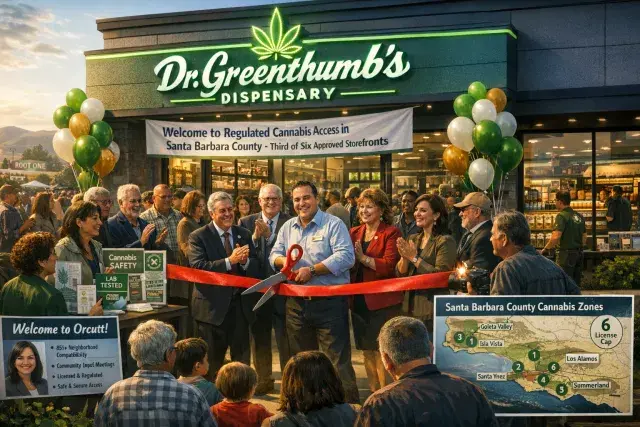
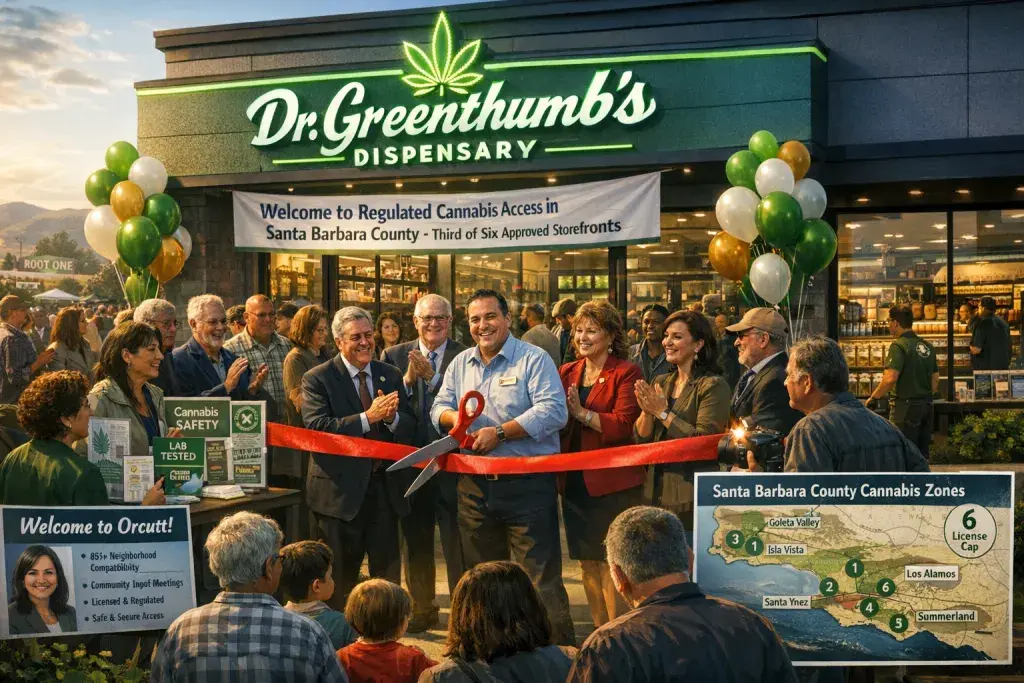
Dr. Greenthumb’s cannabis dispensary swung open its doors on December 7 at 1604 East Clark Ave, Ste. 101 in Orcutt, becoming the third of six approved storefronts in unincorporated Santa Barbara County to launch. As the second in the Santa Maria Valley—following Root One in Guadalupe—this milestone underscores the county’s cautious expansion of legal cannabis retail, prioritizing community integration and consumer safety amid growing demand for regulated products.
County’s Strict Criteria Shape Dispensary Rollout
Santa Barbara County caps storefront licenses at six across targeted unincorporated areas: Eastern Goleta Valley, Isla Vista, Los Alamos, Orcutt, Santa Ynez, and Toro Canyon/Summerland. Currently, Isla Vista, Orcutt, and Santa Ynez sites operate, while others navigate permitting hurdles, as noted by Carmela Beck, program manager for the county’s cannabis division.
The approval process, governed by Chapter 50, Section 50-7, demands rigorous scoring: applicants must hit 85% or higher, with 90% weight on neighborhood compatibility plans. Public input from community meetings two months prior informs priorities, ensuring dispensaries blend seamlessly.
- Key requirements include customer education, community involvement, odor control, parking, and design compatibility plans.
- Dr. Greenthumb’s topped Orcutt rankings, securing land use permits, business licenses, and state Department of Cannabis Control approval.
Dr. Greenthumb’s Focuses on Education and Accessibility
General manager Thomas Casarez emphasizes a “grocery store model” for browsing products like sleep aids and pain relievers, backed by knowledgeable staff. All items carry third-party testing labels verifying purity from contaminants and pesticides—a hallmark of California’s regulated market that protects public health.
The dispensary fosters local ties by supporting businesses and events, drawing praise from Santa Maria residents for its convenience over distant options. Casarez invites skeptics: “Come on in—you don’t need to buy.” This approach counters stigma, promoting informed use in a state where cannabis supports medical needs from chronic pain to insomnia.
Implications for Public Health and Cultural Shifts
This rollout reflects broader trends post-2016 legalization: regulated dispensaries displace black-market risks, ensuring potent, contaminant-free products. In rural counties like Santa Barbara, controlled access reduces impaired driving and youth exposure while enabling tax revenue for community programs.
With cannabis increasingly viewed as a lifestyle and health tool—projected U.S. sales hitting $40 billion by 2026—such vetted storefronts normalize safe consumption. Santa Barbara’s model offers a blueprint: balancing economic growth with neighborhood harmony, potentially inspiring other regions amid evolving attitudes toward plant-based wellness.