A fishing license does not make an export business. That's the first thing anyone searching for how to start a tuna export operation needs to accept. The real work sits downstream of the boat - in the cold chain, the paperwork, and the buyers on the other end of the container.
Three Siblings, One Confusing Category
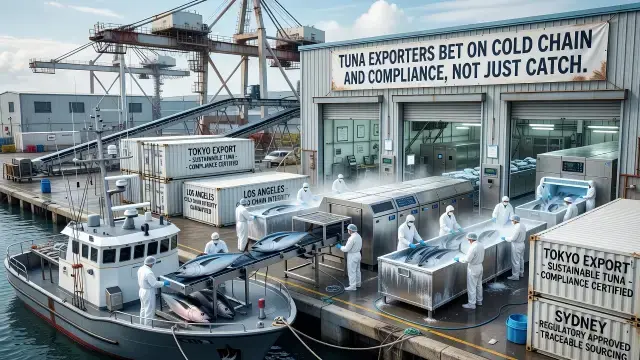
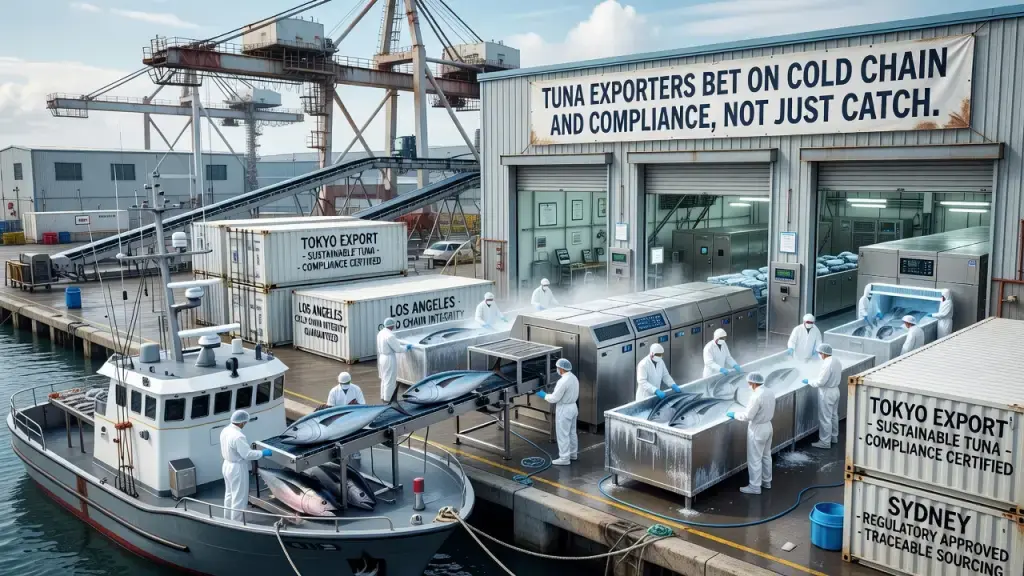
Commercial tuna export is often lumped in with smoked and dried seafood production, or with aquaculture, as if they were variations on the same business. They are not. What separates fresh-chilled and frozen tuna export is the product form, the cold chain it demands, and the buyer it serves. Aquaculture operators sell farmed stock on a different cycle with different inputs. Smoked and dried seafood producers work a shelf-stable product with far looser temperature tolerances. The export operation lives and dies on an unbroken chain of refrigeration from the moment the fish comes aboard to the moment it clears customs in Tokyo, Los Angeles, or Sydney. Confuse the three and the business plan falls apart before the first shipment leaves port.
Where the Real Cost Sits
Here's the catch: most people drawn to this business think the hard part is catching fish. It isn't. Licensing and quota access matter, certainly, and they have to be confirmed early - whether the operation runs its own vessel and crew or sources from local fishers under supply agreements. But the capital-intensive, trust-destroying failure point is the cold chain. Fresh-chilled and frozen tuna for export requires hygienic processing and continuous refrigeration from catch to container. One broken link - a delayed transfer, a warehouse outage, a customs hold without climate control - and the product is no longer sellable at export grade. Buyers in Japan and Australia, in particular, grade on arrival condition, and a damaged shipment does more than cost a load; it costs the relationship.
Compliance as the Price of Entry
Operating legally means stacking several layers of approval. Commercial fishing licenses and quota compliance come first. Seafood-export certification follows, along with registration through the relevant maritime and industry licensing authority, plus foreign investment certificates and permits for any non-citizen ownership stake. Destination markets add their own layer on top - food-safety rules, import documentation, grade standards that vary by buyer and by country. None of this is optional, and none of it can be assembled after the fact. Traceability and sustainability credentials, in particular, need to be built into the operation from day one rather than retrofitted once a buyer asks for them.
Sustainability Is the Market, Not Just the Rule
The government's preference for sustainable over extractive fishery development isn't a constraint layered on top of the business - it's increasingly the business. Pacific-rim buyers are asking for traceability documentation alongside quality grade, and an operation that can show sustainable sourcing and a clean chain of custody commands better pricing than one that can't. In practice, though, this means accepting catch limits that cap upside in any given season. Fish stocks move, prices swing with them, and quota restrictions exist precisely to keep the resource from being fished down. Conservative modeling and real reserves matter more here than optimistic forecasts. Nobody should promise fixed returns from a wild-catch export exposed to that much variability.
Buyers Decide Who Survives
Selling into Japan, the US, Australia, and other Asian markets means meeting distinct grade and documentation expectations for each one. Operators who diversify across multiple buyers reduce exposure to any single market's price swings; those who sell to one importer are betting the whole operation on one relationship and one country's demand cycle. Direct relationships with importers and distributors take time to build and are worth more than any single large contract. Value-added processing or an eventual aquaculture line can diversify revenue further down the road, but those are separate undertakings with their own licensing and capital requirements - not a substitute for getting the export fundamentals right first.