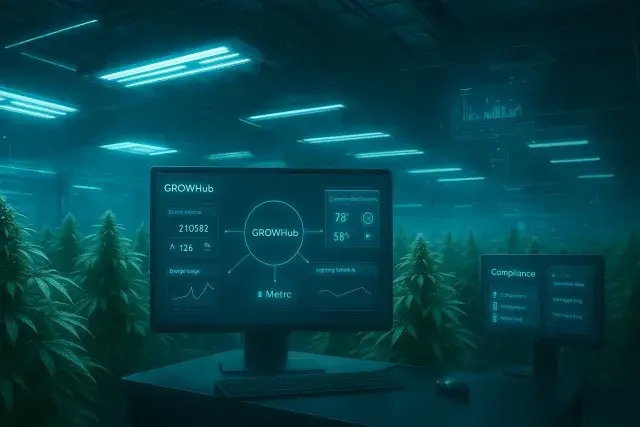
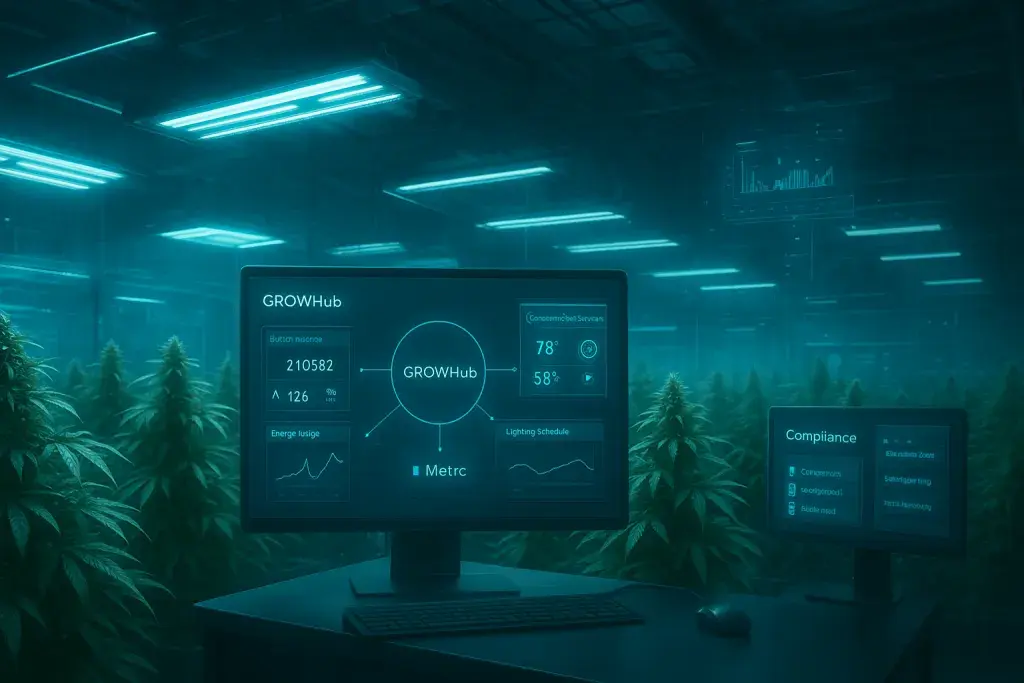
TSRgrow has rolled out a substantial 2026 upgrade to GROWHub, its cultivation management software, adding energy monitoring, expanded batch-record tools, Metrc integration and Building Management System connectivity to what had been primarily a lighting-control platform. The move puts TSRgrow squarely in a growing category of cultivation technology vendors trying to solve a problem that has quietly cost commercial growers time and money for years: operational data scattered across disconnected systems that never talk to each other.
That fragmentation problem is not unique to cultivation. Dispensary operators have wrestled with the same issue on the retail side, where point-of-sale systems, inventory platforms and compliance reporting tools often operate in silos rather than as one connected stack. Multi-state operators evaluating cultivation software upgrades would do well to think about compliance technology the same way retailers increasingly do - as infrastructure, not an afterthought. In states building out their regulatory frameworks, that same logic applies to retail; operators researching dispensary software in Vermont, for instance, are navigating comparable questions about whether their systems can handle seed-to-sale tracking, tax reporting and batch traceability without duplicate data entry. dispensary software in Vermont
Why compliance and cultivation data are converging
Cannabis cultivation generates an enormous amount of operational information - lighting schedules, environmental readings, energy draw, batch identifiers, harvest weights - and regulators increasingly want documentation that connects all of it back to a specific crop cycle. Metrc, the track-and-trace system used by most licensed markets, requires operators to account for plants and product from seed to sale. Historically, that has meant cultivation teams run their grow on one set of tools and then manually reconcile records for compliance reporting on another, a process prone to transcription errors and audit headaches.
GROWHub's expanded batch-record functionality tries to close that gap by organizing cultivation conditions and settings around individual batches as they happen, rather than reconstructing them after the fact. Direct Metrc integration then carries that information into regulatory workflows. In practice, though, the value isn't just fewer spreadsheets. It's a more defensible paper trail - the kind operators need when a state inspector asks for documentation on a specific harvest, or when a wholesale buyer wants assurance about how a batch was grown before it lands on a dispensary's shelf.
Energy costs and facility performance enter the equation
Energy monitoring is the other notable piece of this update, and it reflects a business reality that's become harder to ignore. Indoor cultivation is energy-intensive, and utility costs are a meaningful line item for most commercial operators, particularly in markets without favorable agricultural power rates. By pairing lighting energy data from its Remote Power infrastructure with cultivation and environmental information, GROWHub gives growers a way to evaluate whether a given lighting recipe or production schedule is actually worth its energy cost - not just in terms of yield, but in terms of operating margin.
Expanded BMS connectivity extends that logic facility-wide, letting GROWHub exchange data with broader building systems rather than treating lighting as an isolated function. For operators already managing thin margins under federal tax code Section 280E, tools that surface where energy and labor are actually going during a crop cycle carry real financial weight, not just operational convenience.
What this signals for cultivators weighing software investments
The broader trend here is worth noting: cultivation software is moving toward the same connected, compliance-aware model that retail technology adopted years ago. As federal rescheduling discussions continue and states tighten reporting expectations, cultivators without integrated records may find themselves at a disadvantage during audits or licensing renewals. Fair enough to be skeptical of any vendor pitch that claims to solve traceability outright - no software eliminates the need for careful recordkeeping discipline on the ground. But consolidating lighting control, environmental data, energy use and compliance documentation into one system does reduce the manual reconciliation that has long been a quiet source of operational risk for licensed cultivators.