Taima Growth has secured authorization from Spain's Agencia Española de Medicamentos y Productos Sanitarios - the AEMPS - to cultivate medical cannabis, placing the company among only four operators licensed to do so in the country. The authorization comes more than seven years after founder and CEO Mo Alyasini launched the project in November 2019, a timeline that says as much about European pharmaceutical licensing as it does about the company itself. For international cannabis operators and investors watching European market entry, this is precisely the kind of structural signal that matters.
The path Alyasini took to this point was not the institutional route. He pitched the project to a fund, the fund passed, and he built the operation piece by piece using capital raised entirely from Spanish backers with roots in agriculture, renewable energy, and finance. That means no offshore cannabis money, no multi-state operator balance sheet propping things up - just over €3 million assembled from domestic investors who understood land, energy infrastructure, and patient capital. It's a financing model that might seem counterintuitive to operators more familiar with markets where venture money moves fast, as it does in mature retail markets where tools like pos cannabis alaska have become standard infrastructure for day-to-day dispensary operations. In regulated pharmaceutical cultivation, the capital cycle is longer and the compliance bar is higher at every stage.
Indoor, Pharmaceutical-Grade, and Deliberately Overbuilt
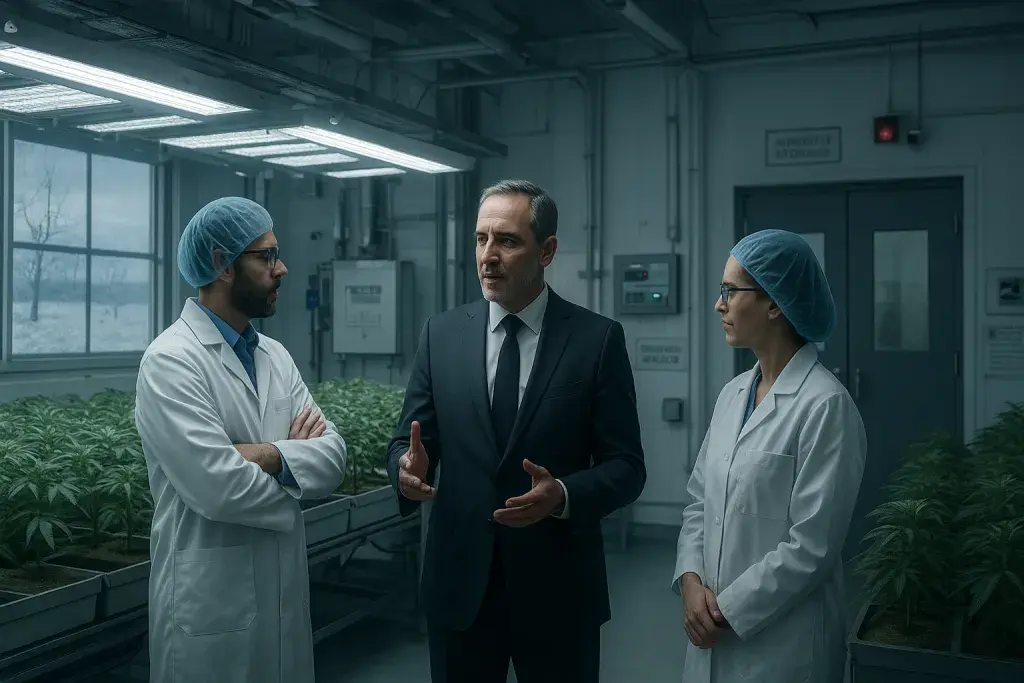
Taima evaluated more than 200 potential facilities before settling on an indoor warehouse in the Ribera region of Burgos - chosen specifically for its cold, dry climate. The original plan called for a high-tech greenhouse. What the company built instead was a fully controlled indoor environment modeled on California-style cultivation: rock wool substrate, precision environmental controls, and automated management of lighting, temperature, humidity, and nutrient delivery. The reasoning was direct. If the end market is medical importers in the UK and Germany, the product has to meet pharmaceutical buyer expectations, not just pass a basic compliance threshold.
The pharmaceutical engineering starts with the physical structure. Taima built its cultivation area and processing area simultaneously, designed to operate under both Good Agricultural and Collection Practices - GACP - and Good Manufacturing Practice - GMP - from the outset. That dual-standard approach is rarer than it should be. Many European licensed producers have built cultivation facilities first and attempted to retrofit GMP-compliant processing infrastructure later, which creates both compliance gaps and cost overruns. Taima's interlock system - separate staff tracks for inside and outside zones, three stages of clothing change, personal airlocks between GACP and non-GACP areas - reflects a facility designed for pharmaceutical audit, not just agricultural licensing.
What's Left Before Commercial Sales Can Begin
Holding an AEMPS cultivation authorization is not the finish line. Before Taima can move product commercially, it must complete three validated production batches, each demonstrating full homogeneity to the regulator's satisfaction. Only after that does the production license follow. Once the production license is issued, the flower moves into the GMP-certified processing area and the export authorization process begins in earnest.
Alyasini puts the remaining timeline at six to seven months of additional work. The physical infrastructure is finished. The GMP area is built. The standard operating procedures are written. What's holding things up, as he describes it plainly, is the paperwork - the sequential regulatory steps that follow construction, each requiring documented evidence rather than operator assurance. Taima currently holds a special narcotics license, which represents meaningful regulatory progress in Spain's controlled-substance framework. The company's stated target is GMP certification early in the new year.
The Market Taima Is Building Toward
The commercial logic here is straightforward. The UK and Germany are the two largest established medical cannabis import markets in Europe. Spain already exports medical cannabis - two operators currently dominate that export activity - but Alyasini is explicit that Taima is not trying to compete on the same product profile. "What they're producing is a long way from what we're after," he says. The positioning is pharmaceutical-grade indoor flower at competitive cost-per-gram pricing, targeting importers who need batch-to-batch consistency and audit-ready documentation chains.
Taima's initial production target is roughly 1,250 kilograms per year, with longer-range ambitions scaling toward nine tonnes depending on market conditions and facility expansion. The current team of six specialists - including quality and production managers with operational experience in Uruguay and Portugal - is expected to grow to around ten once validation is complete. What's worth noting is the profile of that team: international pharmaceutical cannabis experience brought into a Spanish regulatory framework, which reflects how Europe's medical cannabis supply chain is actually being built - not by domestic agricultural operators adapting to pharma standards, but by operators who started from the pharmaceutical end and worked backward.
Seven years from concept to cultivation license is a long development arc by almost any measure. In European pharmaceutical cannabis, it may be close to average. That's the structural reality any operator considering this market needs to factor in before the first euro is committed.