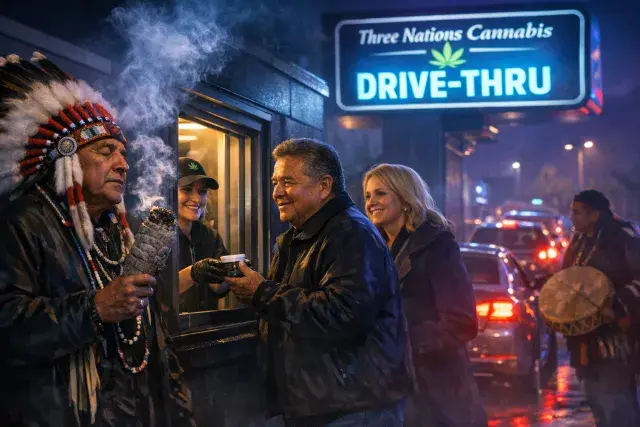
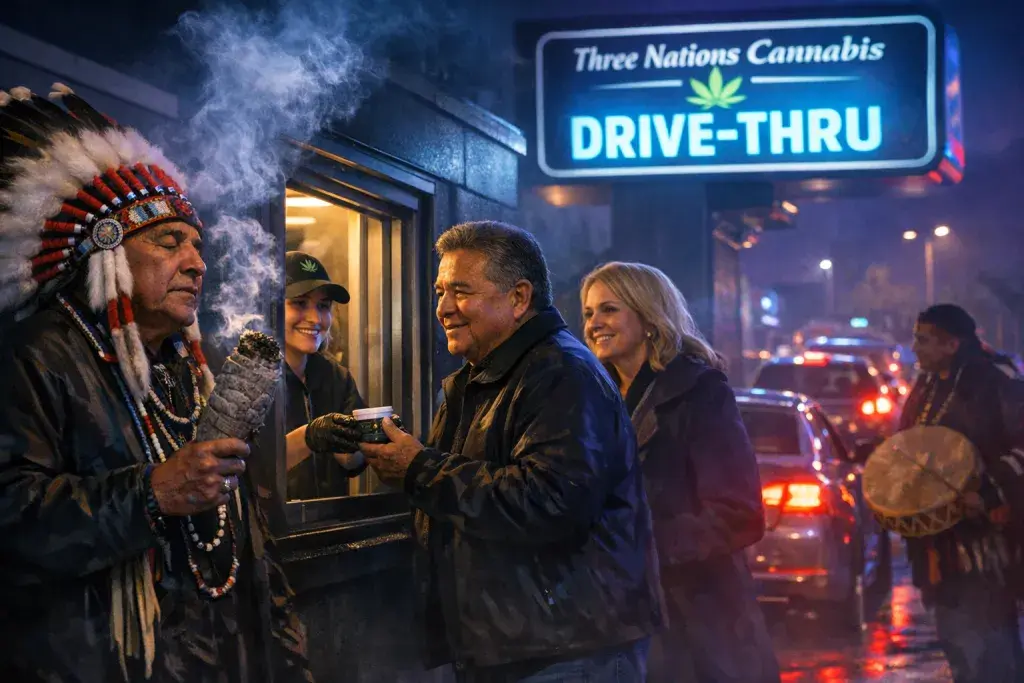
Reno-Sparks Indian Colony opened its Three Nations Cannabis dispensary with a soft launch Saturday afternoon, marking the city's first drive-thru cannabis outlet. Tribal members began the event with a cultural blessing featuring prayers and music, underscoring the blend of tradition and economic enterprise. RSIC Chairman Arlan Melendez made the inaugural purchase—a cream for shoulder pain—before local leaders including Reno Mayor Hillary Schieve toured the site.
Tribal Ownership Drives Economic Expansion
Three Nations Management Corporation, wholly owned by the federally recognized Reno-Sparks Indian Colony, operates the dispensary from a 12,000-square-foot facility at 11570 S. Virginia St., once an Infiniti dealership. As of Saturday, only drive-thru lanes serve customers; the indoor retail space opens in April. This venture fits RSIC's strategy to diversify beyond its established Tribal Smoke Shops, creating jobs for tribal members and the public while funding elder care, education, health services, housing, infrastructure, language preservation, culture, and youth programs.
Multiple Sites Signal Broader Tribal Autonomy
A second RSIC drive-thru dispensary opens March 12 in Verdi, repurposing a former Taco Bell near Gold Ranch. A third location in Spanish Springs follows, though without a set date. Composed of Paiute, Shoshone, and Washoe descendants, RSIC leverages sovereign authority to enter the cannabis market, a sector where tribal lands often operate independently of state regulations. Melendez described the opportunities as "infinite," highlighting how such enterprises reinforce self-determination amid Nevada's evolving cannabis landscape.
Cultural Roots Anchor Modern Business
The opening blessing integrated prayers and music, reflecting RSIC's commitment to cultural continuity amid commercial growth. Tribal cannabis operations nationwide have grown since states legalized recreational use, with sovereign nations pursuing economic sovereignty free from federal prohibitions. In Nevada, where cannabis generated over $1 billion in tax revenue last year from state-licensed sales alone, tribal ventures like Three Nations add a layer of community-focused distribution, potentially easing access while channeling profits into tribal priorities.