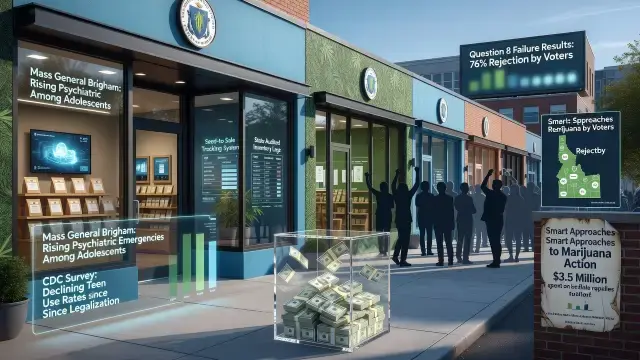
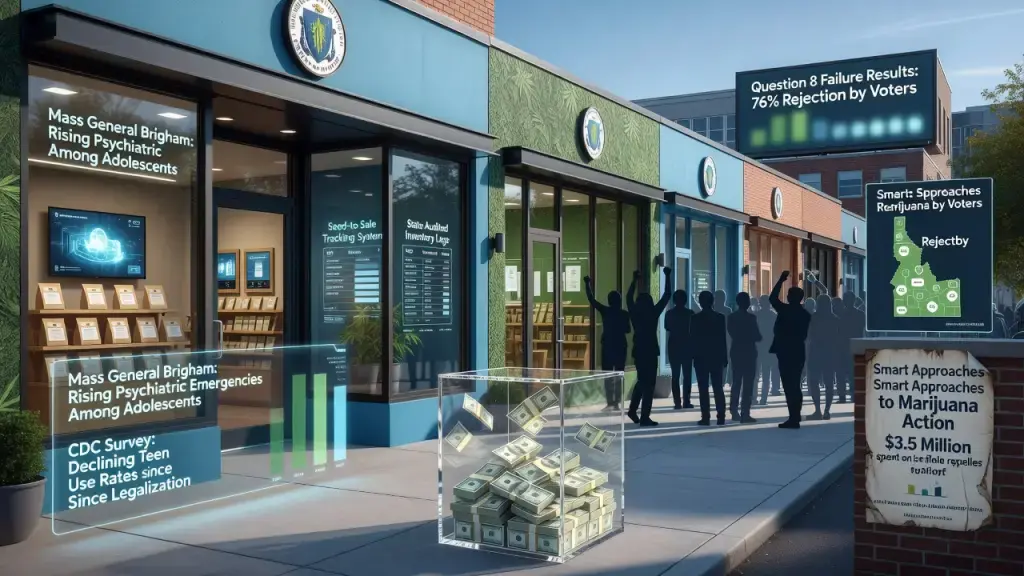
Massachusetts operators can exhale. Question 8, the ballot measure that would have shut down licensed recreational sales and banned home cultivation, failed by roughly three to one. With most ballots counted, about 76% of voters said no. The 2016 framework that built the state's adult-use market stays in place, and so does the retail infrastructure, the tax base, and the supply chain that's grown up around it over the past several years.
What Repeal Would Have Actually Changed
Here's the part that sometimes gets lost in ballot-measure coverage: Question 8 wasn't a full prohibition bill. Adults 21 and older would still have been allowed to possess up to one ounce, with a five-gram cap on concentrate, and medical marijuana would have remained untouched. What it targeted was the retail layer - the roughly 400 dispensaries and 200 adjacent cannabis businesses that depend on licensed, point-of-sale transactions to operate legally. Home growing, a right voters added in 2016, would have been repealed outright. For an industry built on seed-to-sale tracking, compliant packaging, and state-audited inventory, that's not a tweak. That's a teardown.
The financial stakes were real. Retailers in the state have generated an estimated $330 million in state and local tax revenue, money that funds everything from municipal budgets to public health programs tied to cannabis excise receipts. A repeal wouldn't have eliminated demand; it would have redirected it toward unregulated sellers with no COA requirements, no lab testing, and no age-gating at the door.
Why the Industry Mobilized Hard Against It
The opposition campaign pulled in roughly $2.3 million, much of it from industry groups with an obvious stake in keeping licensed shelves stocked. That's a smaller war chest than the $3.5 million Smart Approaches to Marijuana Action put behind the repeal push, yet the industry's side won by a landslide anyway. Worth sitting with that for a second: outspending your opponent doesn't guarantee the outcome when the underlying policy has broad public buy-in.
Ryan Dominguez of the Massachusetts Cannabis Coalition framed the core argument plainly - kill the licensed market and you don't reduce consumption, you just push it toward products nobody tested. That's the operational logic dispensary owners and multi-state operators watch closely in every state where repeal or rollback efforts surface. A regulated channel means lab-tested batches, tracked wholesale pricing, and compliance logs regulators can actually audit. An illicit channel means none of that.
The Teen Health Question Nobody Resolved
Here's the catch, though: beating back a repeal measure doesn't make the underlying health concerns disappear. Supporters of Question 8 pointed to a measurable rise in cannabis-related psychiatric emergencies among adolescents, and researchers at Mass General Brigham have documented that increase. But an association between legal markets and emergency visits isn't the same as proof of causation, and public health researchers studying high-potency products haven't settled the question either way. Opponents of repeal countered with CDC survey data showing teen use rates falling, not rising, since legalization.
Both data sets are real. Neither closes the debate. For operators, that unresolved tension is the real takeaway - expect continued regulatory attention on potency caps, packaging standards, and youth-access prevention, even with the repeal threat gone. States that have weathered legalization fights tend to see the next round of pressure show up as potency limits or marketing restrictions rather than outright bans.
What This Means Beyond Massachusetts
NORML's Paul Armentano called Question 8 a test case for groups trying to roll back legal markets nationally, and the margin here - not close, not competitive - may discourage similar efforts elsewhere. Idaho voters separately rejected a measure that would have handed legislatures sole authority over drug policy, including marijuana. For operators and investors watching the regulatory environment across multiple states, the signal is consistent: once a licensed adult-use market is established and generating tax revenue, reversing it at the ballot box is a steep climb, even when health advocates bring legitimate data to the fight.