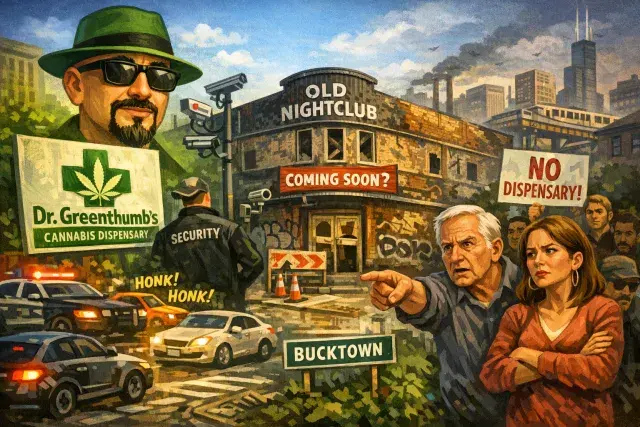
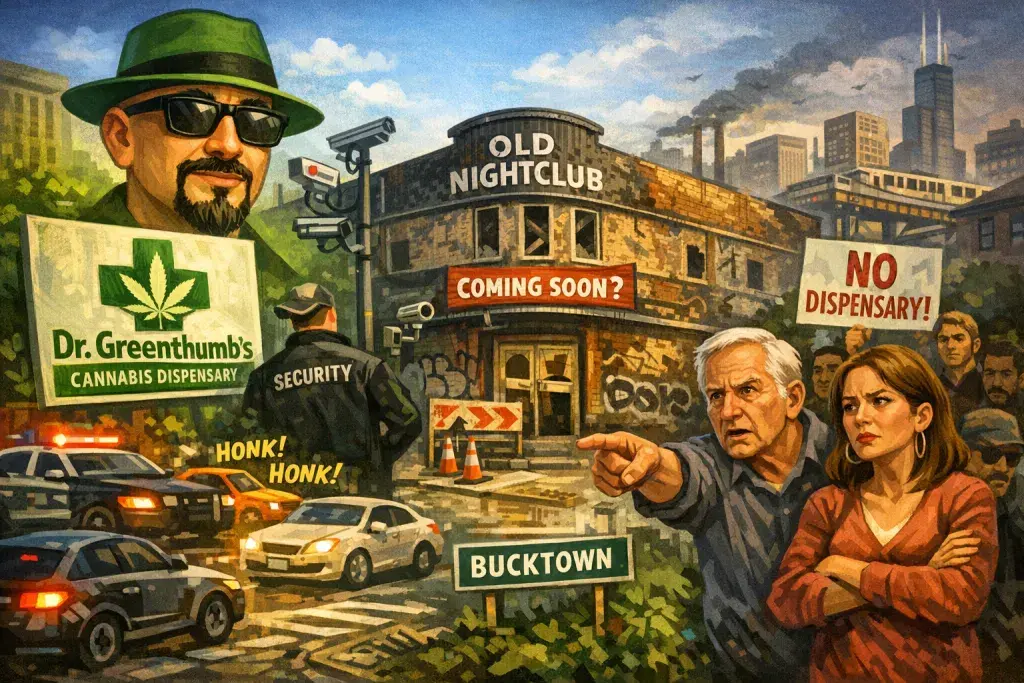
A cannabis dispensary chain plans to transform a long-vacant, condemned nightclub in Chicago’s Bucktown neighborhood into its first Illinois outlet, sparking resident worries over traffic congestion and shifting local character. Dr. Greenthumb’s, operated by TRP, unveiled renovation and security proposals at a community meeting hosted by Ald. Scott Waguespack (32nd) on Wednesday evening. The move revives a site scarred by violence and decay, but neighbors question whether it fits the area’s residential fabric.
From Violence-Plagued Club to Abandoned Eyesore
The building at 2200 N. Ashland Ave. once housed Green Dolphin Street, a nightclub notorious for violence through the 2000s and 2010s. A fatal 2015 altercation that killed two people marked its nadir, leading to a brief reopening under a new name before permanent closure in 2017. Since then, the structure has sat empty, drawing vandals and unauthorized raves that exacerbated neighborhood frustrations.
Ald. Waguespack emphasized the city’s stake in repurposing such properties. Dispensaries bring tax revenue, he noted, but his priority centers on securing the site and restoring its appearance to curb break-ins. TRP must undertake major renovations to meet state standards before opening, addressing years of neglect.
Security Plans and Community Hiring Pledges
TRP spokeswoman Anna Mendoza outlined rigorous security mandated by Illinois cannabis regulations. The dispensary will feature electronic ID scanners, no visible products at the front counter, and round-the-clock patrols inside and outside the building. These measures aim to prevent loitering and ensure controlled access.
Mendoza stressed local hiring as a core commitment. Employing neighborhood residents, she said, equips staff with intimate knowledge of the community, fostering smoother operations and stronger ties. Such strategies reflect broader industry efforts to integrate into urban settings while complying with strict oversight.
Neighbors Raise Traffic and Identity Concerns
About 20 attendees, mostly from the 74-unit Triangle Square condos directly across the street, focused on traffic impacts. Webster Avenue already clogs from 3 to 6 p.m., worsened by a nearby bridge reopening, with garage access posing safety risks and recent accidents. One resident called added dispensary traffic a threat to safety.
Others decried a perceived shift in Bucktown’s identity. Proximity to Ivy Hall at 1720 N. Damen Ave. already marks the area, and another outlet feels like a bait-and-switch from the neighborhood’s school-centered past, one man argued. Waguespack defended the meeting as a transparency step to solicit feedback before TRP’s February Zoning Board of Appeals presentation.
Balancing Revenue, Renewal, and Neighborhood Fit
The proposal pits economic upside against quality-of-life fears in a gentrifying enclave. Vacant properties like this one drain resources and invite trouble, yet cannabis retail—legal in Illinois since 2020—amplifies foot and vehicle traffic in tight spaces. Without a traffic study yet from TRP, unresolved tensions could shape zoning outcomes and signal how cities reconcile vice histories with modern vice economies.