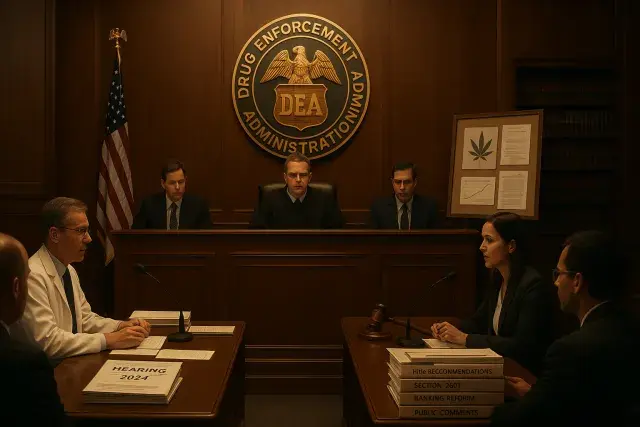
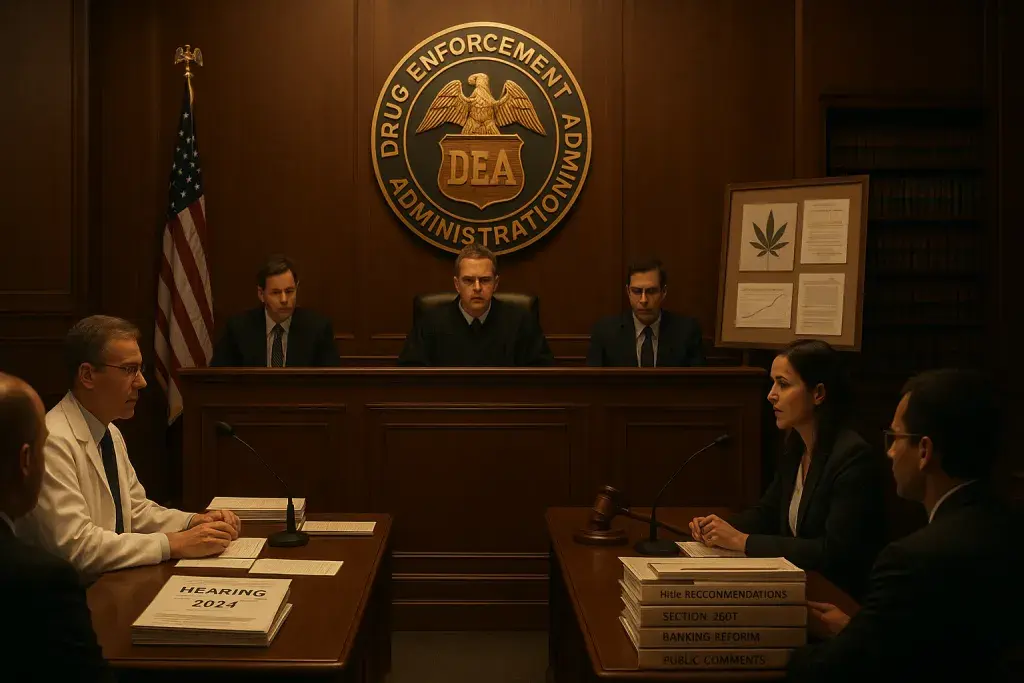
The Drug Enforcement Administration opened its formal administrative hearing on June 29 to consider moving cannabis from Schedule I to Schedule III under the Controlled Substances Act - and the guest list raised immediate eyebrows across the industry. Every invited witness opposes rescheduling. Not one proponent of rescheduling was granted a seat at the table. The optics are stark, but the legal reasoning behind that decision is worth examining carefully before drawing conclusions about where this process is headed.
For cannabis operators tracking this closely - from multi-state operators managing compliance stacks across several markets to single-license dispensaries running IndicaOnline dispensary software in Maryland and watching federal scheduling news for any sign of banking reform or tax relief - the framing matters. The outcome of this particular hearing will not directly affect cannabis products already rescheduled to Schedule III under the Department of Justice's April 2026 order. That earlier action covered FDA-approved products and medical cannabis products. The current proceeding addresses only cannabis products that still sit under Schedule I. Two separate tracks. Two separate legal fights.
Here's the procedural logic DEA appears to be applying: under its own regulations, only "interested persons" - defined as those adversely affected or aggrieved by a proposed rule - are entitled to speak at a rulemaking hearing. Because the proposed rule would move cannabis to Schedule III, DEA has determined that proponents of rescheduling are not adversely affected by it, and therefore don't qualify as interested persons. DEA has cited this exact standard in its rejection letters to supporters who sought speaking rights. Critics have pointed out that DEA allowed proponents to speak at a 2024 rescheduling hearing on an earlier proposed rule. The counter-argument is that the current hearing appears to be applying a stricter, more legally defensible interpretation of the regulation - one that hews closely to the actual text rather than administrative custom.
DEA Bears the Burden - and Is Building Its Case Accordingly
In this proceeding, DEA is the party advocating for rescheduling. It carries the burden of proving rescheduling is warranted by a preponderance of the evidence. To do that, it has lined up two witnesses: a physician expected to testify on cannabis's medical benefits, and an FDA official who will walk through how the agency developed its Schedule III recommendation. What DEA is not doing is re-introducing a pharmacologist from the 2024 hearing whose report linked cannabis to psychosis and cognitive harm. DEA has indicated it won't call her - and that opponents who want her testimony will need to subpoena her themselves.
That's a deliberate evidentiary choice. By keeping the pro-rescheduling record tight and factually grounded - the HHS recommendation, FDA's analysis, DEA's own findings, and the substantial volume of public comments already in the administrative record - DEA is constructing a case designed to survive "arbitrary and capricious" review. That is the judicial standard courts apply when evaluating agency rulemaking decisions. An agency that demonstrably considered all opposition, heard from every adverse party, and still concluded rescheduling was warranted has a far stronger position before a reviewing court than one that cut corners on process.
To put it plainly: inviting every opponent into the room, letting them make their best arguments, and then proceeding anyway is not a sign of weakness. It is, in many respects, the most legally sound posture DEA could adopt. Judges use similar logic when they issue detailed rulings that anticipate and address the strongest counterarguments. Thoroughness on the front end is insurance on the back end.
What the Rescheduling Record Already Contains - and Why It Matters
The absence of pro-rescheduling testimony at the June 29 hearing does not mean the administrative record is empty of supporting evidence. The Department of Health and Human Services issued a formal recommendation to reschedule. FDA developed a documented analytical framework supporting Schedule III classification. The public comment process generated a significant volume of submissions, including many from the same proponents who are now frustrated at being excluded from the hearing itself. All of that material is part of the administrative record. It doesn't disappear because supporters aren't testifying live.
There is a harder political question sitting underneath all of this. The administrative law judge's recommendation - whatever it turns out to be - is exactly that: a recommendation. The DEA administrator can accept or reject it. Beyond the administrator, the attorney general holds ultimate authority over the scheduling decision. So the rescheduling process carries both regulatory and political weight at every level. The legal architecture DEA is building matters, but it is not the only variable.
What Operators Should Actually Be Watching
For dispensary operators, licensed brands, and cannabis wholesalers, the immediate practical stakes of this specific hearing are limited - but the downstream implications of a successfully defended rescheduling decision are significant. A move to Schedule III that survives legal challenge would affect how cannabis businesses are taxed under Section 280E of the Internal Revenue Code, how banking institutions assess risk, and how the regulatory compliance environment evolves at the federal level. Those are not abstract policy questions. They show up in cash flow, in the cost of capital, and in the operational burden every licensed operator carries.
The pending legal challenges to the earlier medical cannabis rescheduling offer a preview of what comes next. Some of the same parties opposing rescheduling at the June 29 hearing have already sued over that earlier action. DEA almost certainly anticipates being sued again. The structure of this hearing - strict adherence to the "interested person" definition, a focused pro-rescheduling evidentiary record, and maximum accommodation of opponents - reads as an agency preparing for that litigation from the start, not reacting to it after the fact. Whether that preparation holds up in court is a separate question. But the strategy is coherent, and it is worth understanding on its own terms before dismissing the entire proceeding as theater.