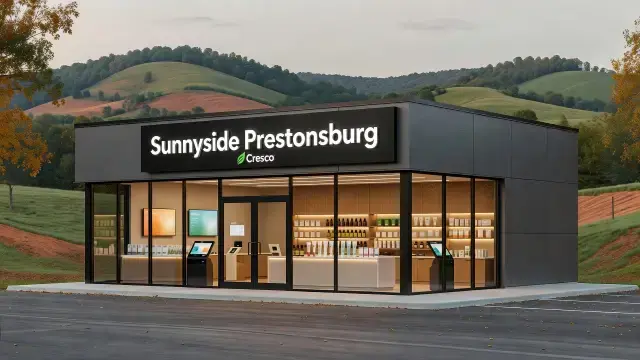
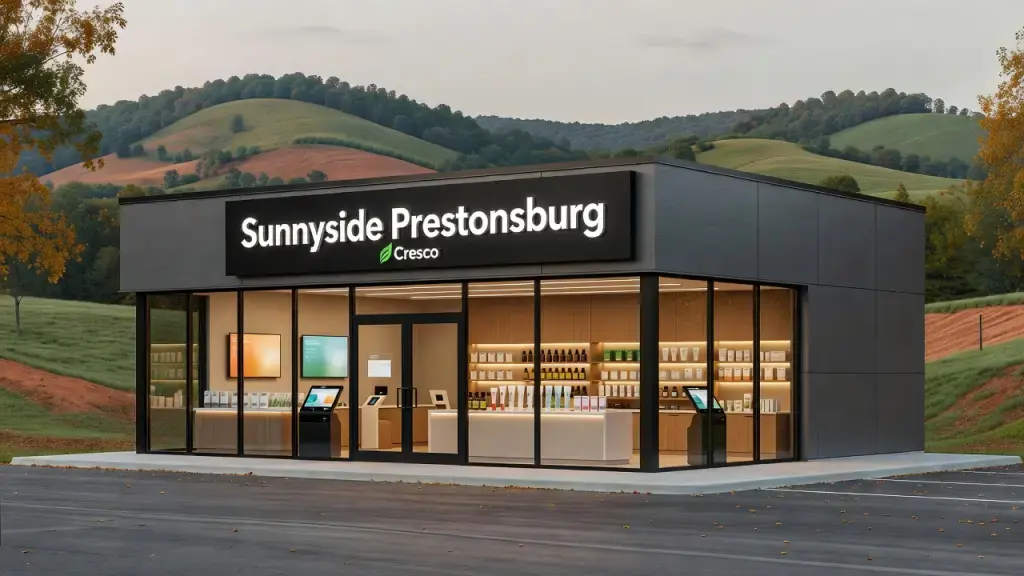
Cresco Labs opened Sunnyside Prestonsburg on Oct. 23, marking the company's 83rd dispensary nationally and, more notably, the first time Kentucky has had operating medical cannabis dispensaries in all 11 of its designated regions. That regional completeness matters more than the store count. For a program still in its early build-out phase, geographic coverage is the metric that actually tells regulators, patients, and operators whether the system is functioning as designed.
Why Regional Coverage Is the Real Milestone
Medical cannabis programs live or die on access, not licensing totals. A state can issue dozens of licenses and still leave entire regions underserved if operators cluster around population centers with easier real estate and logistics. Kentucky's program was always going to face this test in its eastern counties, where terrain, lower population density, and longer supply routes make retail buildout harder to justify financially. A dispensary in Prestonsburg closing that last regional gap is a signal that the state's licensing framework is functioning as more than a paper exercise - it's translating into physical points of sale patients can actually reach.
That's not a small operational lift. Opening a store in a less densely populated market means thinner expected foot traffic, longer supply chain lines from cultivation and processing facilities, and a harder case for the kind of SKU depth larger urban dispensaries can support. Wellness-adviser staffing, compliant packaging requirements, and the lab-testing and COA documentation that has to travel with every batch don't get cheaper just because the store is farther from the distribution hub.
What Multi-State Operators Are Watching Here
Cresco Labs' expansion in Kentucky fits a familiar MSO playbook: move early into a new medical program, build geographic density before adult-use conversion becomes a live policy question, and use that footprint as leverage in future wholesale and vertical-integration decisions. Kentucky's program is medical-only for now, which keeps the regulatory profile narrower than adult-use states - tighter patient registration requirements, more limited advertising rules, and a smaller but more predictable customer base built around registered patients rather than walk-in retail traffic.
For other operators and prospective licensees eyeing Kentucky, the Prestonsburg opening is worth reading as a cost signal. Rural and semi-rural buildout is expensive relative to expected volume, and 280E's tax treatment of cannabis businesses doesn't discriminate between a flagship urban store and a smaller regional outpost - both carry the same disallowance of standard business deductions at the federal level. Operators underwriting expansion into underserved regions need pricing and inventory models that account for lower throughput without compromising compliance logs, seed-to-sale tracking accuracy, or testing standards.
Patient Access and the Compliance Backbone
The dispensary's structure - in-store purchases alongside online ordering for pickup, staffed by trained wellness advisers - reflects how medical programs typically try to balance product education with regulatory guardrails. Every product on the shelf, from flower intended for vaporization to tinctures, topicals, and edibles, has to carry documentation tying it back to a tested batch. That chain of custody, enforced through state seed-to-sale systems, is what separates a regulated medical dispensary from an unregulated sale: it's the mechanism that lets a patient or regulator trace any product back to its source if a safety question ever arises.
Access expansion doesn't eliminate the underlying consumer-protection framework. Registered-patient requirements remain in place, purchases are still subject to the state's medical cannabis statutes, and dispensaries operating in newly reached regions carry the same testing, labeling, and age-verification obligations as those in more established markets. The milestone here is geographic, not regulatory - the rules travel with the store.