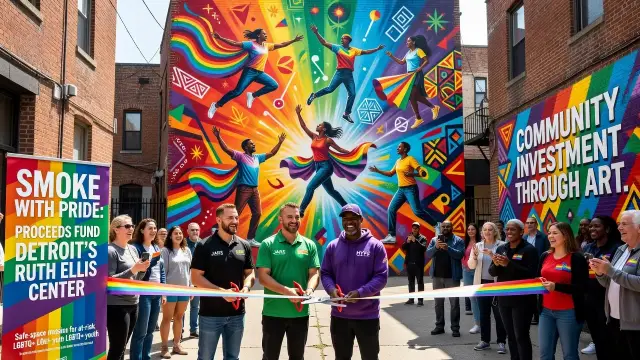
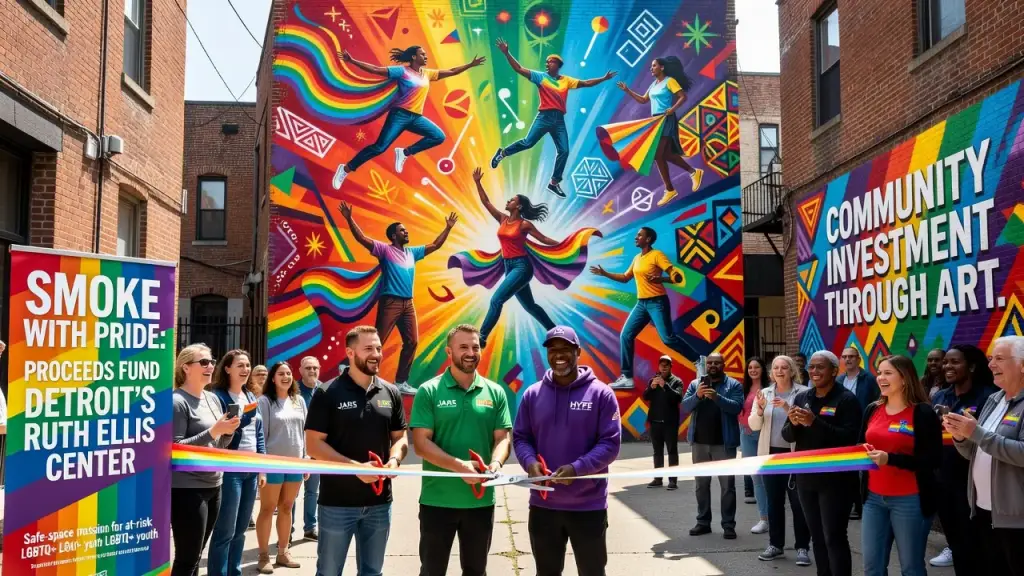
A ribbon-cutting ceremony in downtown Ferndale, Michigan, marked the debut of "Polychromatic Super You," a 40-by-25-foot mural by Michigan artist Joey Salamon, tucked into the alley at 258 W. Nine Mile Rd. The piece was commissioned by JARS Cannabis and HYPE Cannabis, and it doubles as the visual anchor for the two companies' Smoke with Pride campaign, which directs proceeds toward Detroit's Ruth Ellis Center, a support and safe-space organization serving at-risk LGBTQ+ youth.
On paper, this looks like a marketing story. In practice, it says something sharper about how cannabis retailers are positioning themselves inside markets where local goodwill still carries real weight for license renewals, zoning variances, and neighborhood relations. Dispensaries operate under tighter advertising restrictions than most retail categories - no billboards near schools, no health claims, limited broadcast reach in many states - so community-facing projects like a commissioned mural fill a promotional gap that traditional channels can't. That matters operationally, too: the same rigor operators apply to public-facing campaigns tends to show up in how they run compliance behind the counter, whether that's tracking every SKU through state seed-to-sale systems or running a Metrc-compliant POS for Arizona storefronts to keep manifests and lab results properly logged. Metrc-compliant POS for Arizona
How the Giving Structure Actually Works
The mechanics behind Smoke with Pride are worth unpacking, since donation-tied retail promotions carry their own compliance considerations. Ten percent of proceeds from HYPE products sold at JARS locations, and 100 percent of proceeds from the JARS x HYPE Smoke with Pride Kit, go to the Ruth Ellis Center. That's a defined, auditable revenue split - the kind of structure a finance team can track through point-of-sale reporting without much guesswork. For multi-state operators watching how charitable tie-ins get executed, the lesson here is that transparency in the percentage and the beneficiary matters more than the gesture itself. Consumers and regulators alike tend to notice vague "give back" language that never specifies where money actually lands.
Public Art as Zoning and Community Strategy
Murals commissioned by cannabis retailers aren't just brand exercises; they're also a quiet answer to a persistent friction point in adult-use markets - local resistance to dispensary storefronts. Municipalities that once treated cannabis retail as a nuisance use are increasingly the same ones granting permits for street-level art, foot traffic improvements, and alley activation projects. A commissioned piece in a public alley, paid for by two licensed retailers, functions as a low-cost way to demonstrate investment in a corridor rather than extraction from it. That distinction shows up later, when operators go back before planning commissions for signage approval or expanded hours.
What This Signals for Other Operators
The Ferndale mural also underscores a broader pattern in cannabis marketing: retailers are using QR-coded public installations to route foot traffic toward donation portals and educational resources rather than toward direct sales. That's a meaningful distinction for compliance teams, since promotional material tied to charitable causes still needs to stay clear of age-restricted advertising rules and avoid implying any therapeutic benefit. Retailers weighing similar projects should treat the fundraising language, the beneficiary disclosures, and the on-site signage with the same scrutiny they'd apply to compliant packaging or a wholesale menu - because the same regulators reviewing product labels are often the ones reviewing outdoor advertising, too.